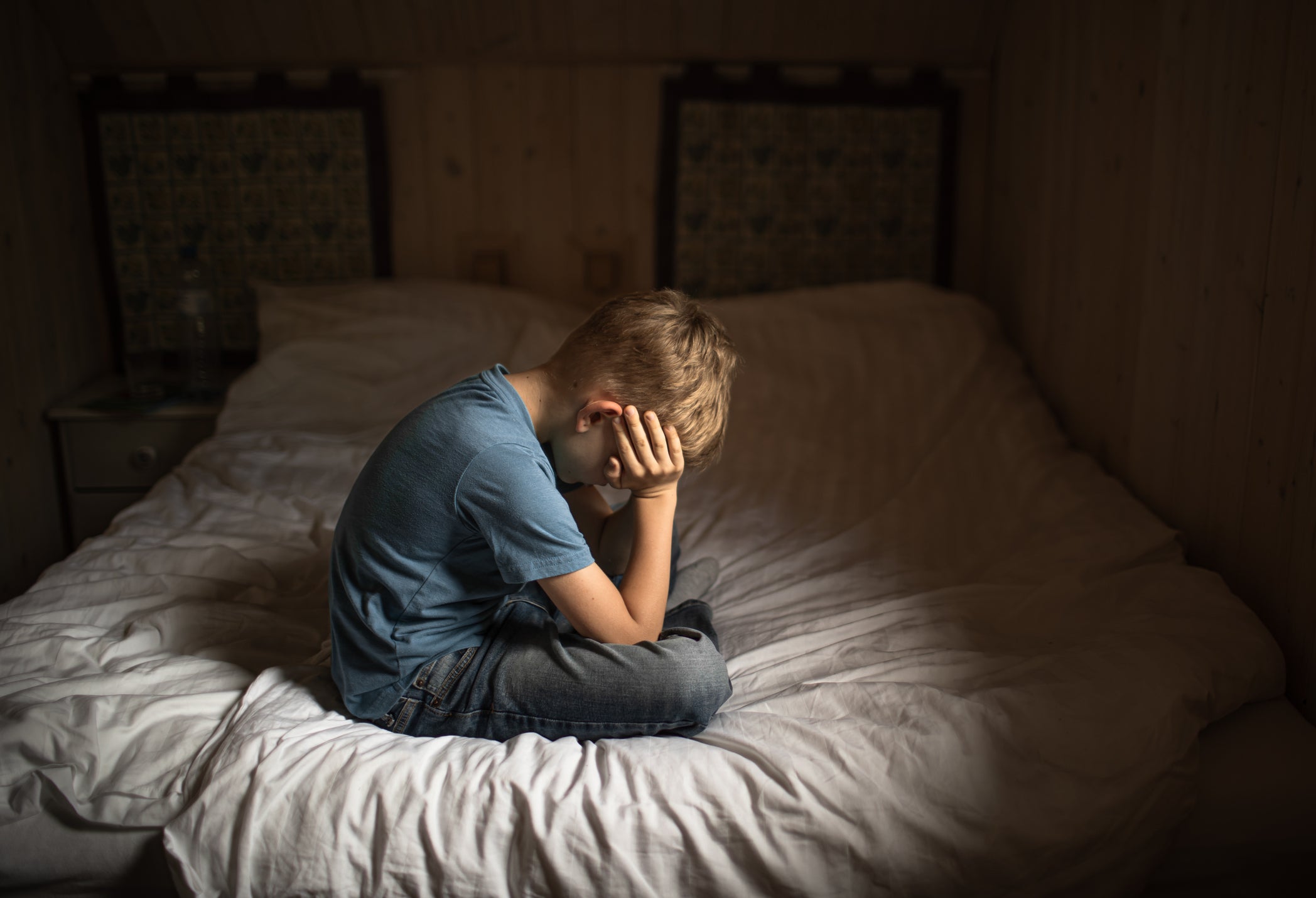
You call your teen’s name, but they don’t respond. They’re staring past you. You call again, louder this time. Nothing – how rude.


But what if they’re zoning out?
For some teens, this can be a sign of dissociation, a temporary disconnection from thoughts, feelings, body or surroundings. It’s the brain’s way of protecting itself from overwhelming stress or emotion.
Dissociation is often linked to trauma – experiences that feel deeply distressing or life-threatening.
But because dissociation is quiet and invisible, it often goes unnoticed. A withdrawn or “spacey” teen draws less attention than one who’s anxious or acting out. Misunderstanding this response can lead to frustration and strained relationships.
In two recent studies, we interviewed teens who dissociate, as well as their parents and clinicians. We wanted to understand better what it feels like when it happens – and what would help.
What is dissociation?
Dissociation is the brain’s safety switch. When emotions or memories feel too intense, the brain creates distance, like mentally stepping out of the room.
It’s common to experience mild forms of dissociation, such as zoning out during a boring meeting. But for teens who’ve experienced trauma, it can feel more intense and be more disruptive.
Many people underestimate how common trauma is for young people.
Worldwide, almost three in four teens have experienced at least one traumatic event, such as violence, serious accidents, or the death of a loved one. In Western countries, this may be closer to one in two.
Distressing content is also streamed directly to teens’ devices. Violent videos, cyberbullying or hate-based online abuse can all trigger overwhelmed feelings.
When feelings become too much to handle, dissociation offers immediate relief. But overuse of dissociation to cope can disrupt learning, relationships and daily life.
Surveys suggest this clinical form of dissociation affects 7–11% of high school students, making it as common as anxiety disorders.
Yet dissociation in young people is still not well understood, even by professionals.
What we wanted to find out
To better understand dissociation, our research team spoke with dissociating teens about what the experience feels like, what triggers it and what helps.
Seven teenagers who had experienced significant trauma and were receiving care at a Western Australian mental health service shared their experiences. Given that dissociation can affect memory and awareness, we also interviewed each teen’s parent and primary clinician.
While our study involved a small number of teens, their reflections gave us powerful insight into the lived experience of dissociation in adolescence.
What teens told us
Teens described dissociation as feeling disconnected from their body or as though reality had gone blurry.
Lisa* (age 17) said: “I could look in the mirror and not feel like it was me […] I knew it was me, but I didn’t feel like it was me.”
Verity* (age 14) explained: “I’m zoned out and don’t notice what’s going on around me. […] People could be calling my name or waving in my face, and like, I don’t notice.”
Parents told us their teens could sometimes become completely unresponsive – unable to move or talk – or have emotional outbursts they later couldn’t remember.
Dissociation was most likely when teens felt strong emotions triggered by reminders of trauma, conflict or peer rejection.
What helps
Many teens said the most helpful thing was knowing a trusted person was nearby. They often didn’t want advice or questions – just reassurance that someone would stay close.
Lisa said: “I like having company because I don’t cope on my own […] it’s helpful to have someone just wait with me until it’s over.”
Sometimes, they wanted more active help with strategies.
Amy* (age 16) said calming techniques can help: “if someone else is there and they’re telling me what to do […] I can’t really do it on my own when I’m like that [dissociating].”
Others said retreating to quiet spaces helped them come back to the present.
But when they didn’t feel able to reach out for support, some teens turned to less helpful strategies, like disappearing into fantasy worlds for hours.
Our research suggests that to reduce the chances of this, it’s important for teens to know you’re there.
What parents can do
Bullying, rejection or failure can all feel catastrophic to a developing mind. Teens may also experience traumas that adults don’t know about.
If a teen seems distant or unresponsive, stay curious rather than frustrated. Ask yourself what might be happening beneath the surface.
About the authors
Bronwyn Milkins is a Postdoctoral Researcher in Youth Trauma and Dissociation at The Kids Research Institute Australia.
Helen Milroy is a Professor & Director in the Centre for Aboriginal Medical and Dental Health (CAMDH) at The University of Western Australia.
This article is republished from The Conversation under a Creative Commons license. Read the original article.
When dissociation happens, stay physically present and calm. Offer to help them with activities like going for a walk, breathing slowly, or doing something sensory, such as holding a warm drink.
If dissociation happens frequently or severely, consider reaching out to a mental health professional or GP for support.
Why it matters
Dissociation isn’t bad behaviour – it’s a coping response to trauma and stress, and can be a sign a teen is overwhelmed. When adults recognise this, they can respond with empathy instead of frustration.
We’d like to see trauma-informed approaches in homes and schools. This means building safety and trust with young people and supporting collaboration.
Offering choice (for example, taking a short break or choosing where they sit in the classroom) can empower them to have some control over their environment. Calm, sensory-friendly spaces can also help kids feel safe and ready to learn.
Recognising dissociation and responding with patience and compassion can help your teen and strengthen your relationship in the process.
*Names have been changed to protect privacy.
If this article has raised issues for you, or if you’re concerned about someone you know, call Lifeline on 13 11 14 or Kids Helpline (ages 5–25 and parents) on 1800 55 1800.
If you are experiencing feelings of distress, or are struggling to cope, you can speak to the Samaritans, in confidence, on 116 123 (UK and ROI), email [email protected], or visit the Samaritans website to find details of your nearest branch.
If you are based in the USA, and you or someone you know needs mental health assistance right now, call or text 988, or visit 988lifeline.org to access online chat from the 988 Suicide and Crisis Lifeline. This is a free, confidential crisis hotline that is available to everyone 24 hours a day, seven days a week. If you are in another country, you can go to www.befrienders.org to find a helpline near you.