“I couldn’t have imagined that the act of drawing animals…would be like drawing an arc from the working naturalist I am now.”
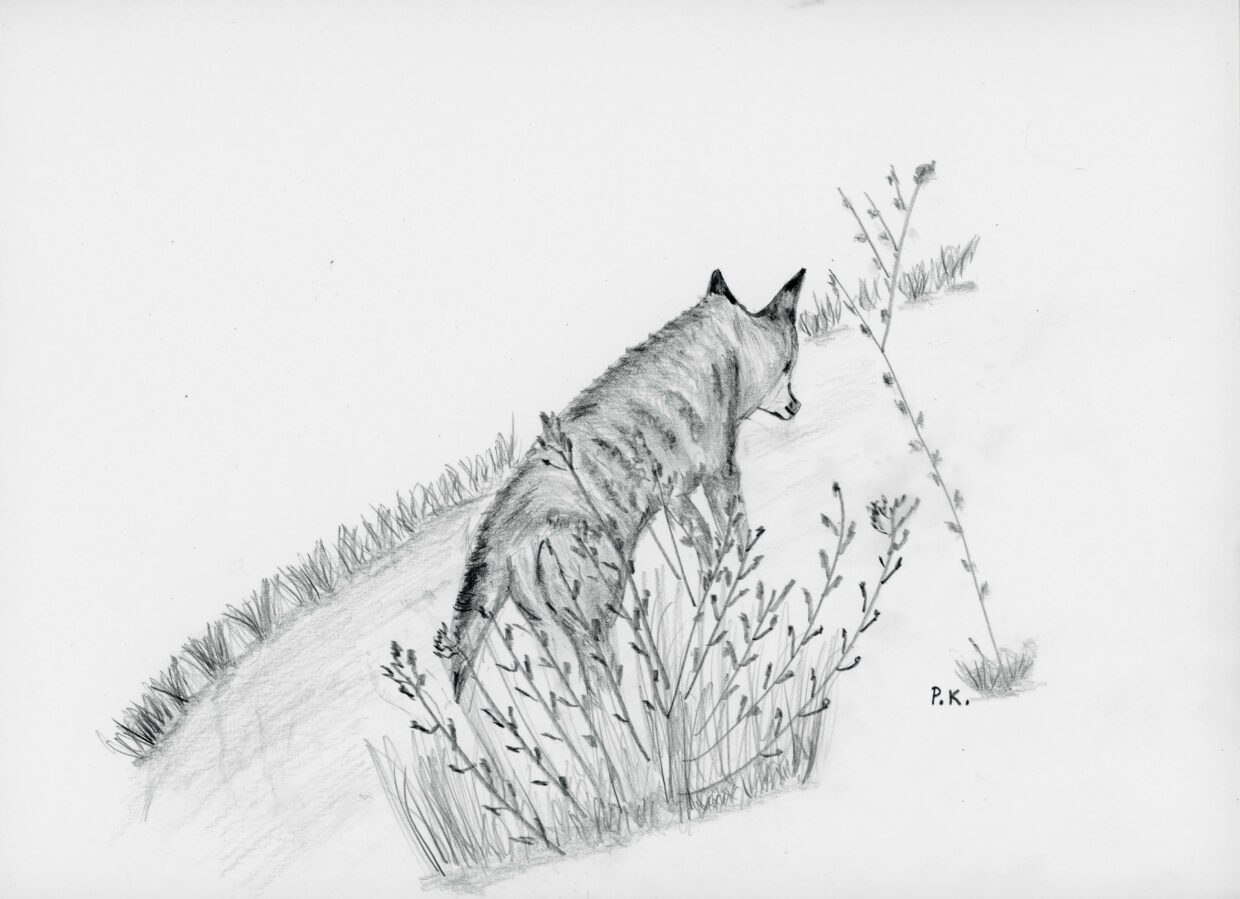
On a snowy winter afternoon, a coyote was slipping out of the microwild around my home as I tried, without success, to get a good photograph. (I created the concept of the microwild while writing the book The Light Between Apple Trees to describe fragments of nature that are large enough to foster plant and animal biodiversity.) Moving behind some chamisa brush, the coyote was clear enough for the eye to see but elusive on camera; the photographs looked like Cubist art. After the coyote left, I spontaneously began to sketch the animal.
RELATED STORIES


Article continues after advertisement
A sly predator, the coyote plays a key role in my new book, The Grassland Queen, which brings readers into the lives of the animal communities in the American grasslands through the story of the long-billed curlew—the largest shorebird in North America. Having experienced curlew predators such as coyotes and foxes over the years of doing field work, I kept working on my coyote sketch from memory, field sketches, and my Cubist photographs. I had just come off a round of manuscript edits and finalizing endnotes and, in comparison, drawing felt meditative.
The deadline to submit the artwork for The Grassland Queen was looming. My plan had been to submit my long-billed curlew photographs but I learned that they would not be published in color. Now I looked more closely—though some were visually striking, black-and-white photographs wouldn’t have the emotional resonance I was looking for. I wanted readers to feel the intimacy I had experienced while observing the curlews. After years of grassland research and hikes through curlew habitat, evocative moments from the birds’ lives were vivid in my mind.
But did I dare to draw the curlews? I’d loved art in high school and won a few national prizes and, as a naturalist, I routinely make field sketches—but these are for my own reference. Not wanting to overthink the process of drawing, I decided to do flash experiments and test whether I could transmit how I see curlews. So I stopped thinking and began drawing. Time was not on my side. The book was going into production the next month and I was obligated to submit the artwork within three or at most four weeks.
My first three attempts at drawing curlews weren’t any good. As the days went on, I slipped into working more seriously. Mornings are my good time, and when I began summoning curlews onto sketch paper in the mornings, it grew clear that I was prioritizing drawing over field work.
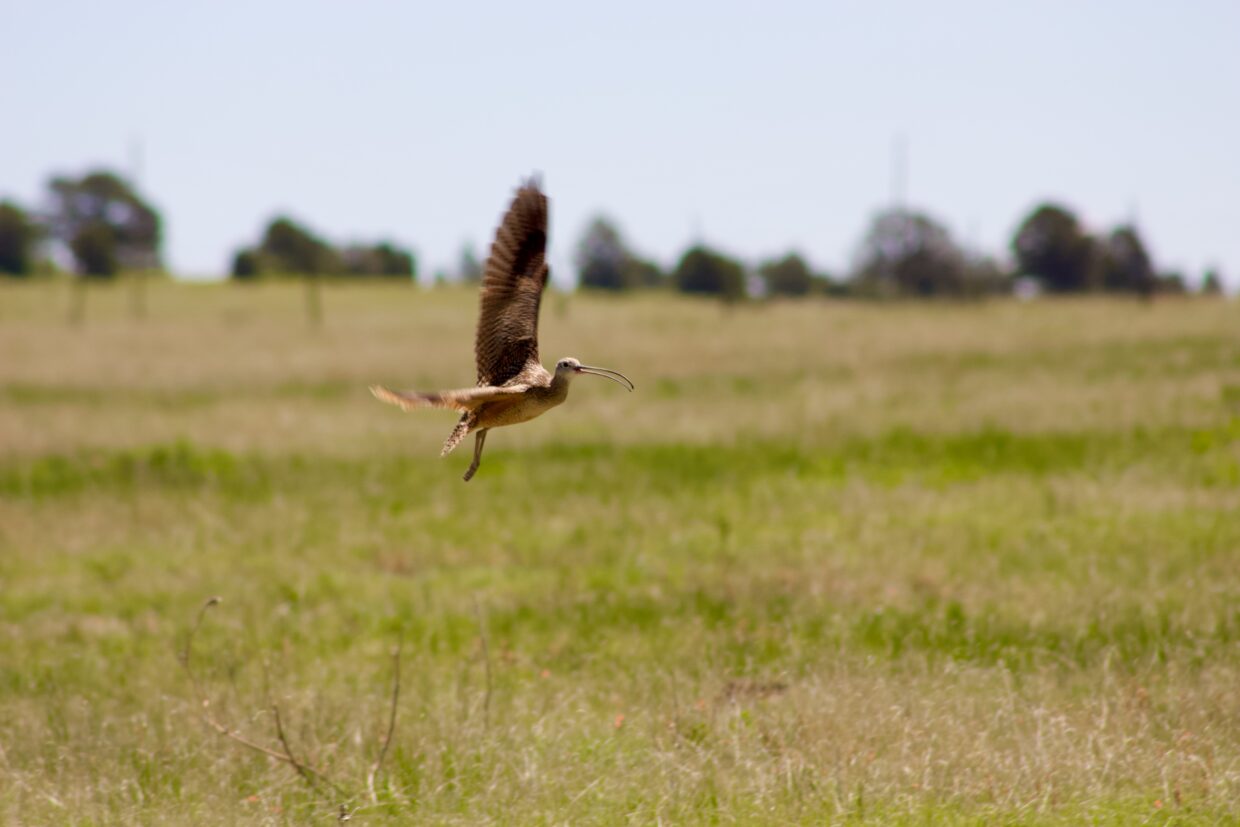
Eventually the curlews heard my pleas and they came. Perhaps the hours I put in was an invitation, like the hours I put into finding them in the grasslands. In any case, a shift occurred and the curlews began to point the way. I entered a space where I was engaged in pure drawing—the pencil moved without thoughts getting in the way. Despite years of researching the birds, I got excited, even unsettled, to see their eight-inch-long bill realized on paper. What is the meaning of that bill? Yes, it helps them dig for crustaceans in the winter. But what does that crescent-moon arc signify?
I feel solace in working with pencil and paper. At book signings, people remark at my handwriting and I joke that the nuns at the Catholic schools I attended instilled penmanship in me. I’m not sure that I have a specific memory that corroborates that remark, but the nuns were exacting about our work and there was certainly no grade inflation. I loved the spare rooms, the slanted wooden desks, and writing on paper using an ink pen with an elegant shiny nib. We refilled the pen with a dropper. At my desk at home I had a shapely inkpot of royal-blue ink; my mother covered the desk with a sky-blue tablecloth and I would accidentally smudge ink on the cloth. Even when it came back from the wash, the tablecloth had ink smudges like thunderclouds. These writing instruments and accoutrements made a real impression on me. When I was eight, I began to write poetry.
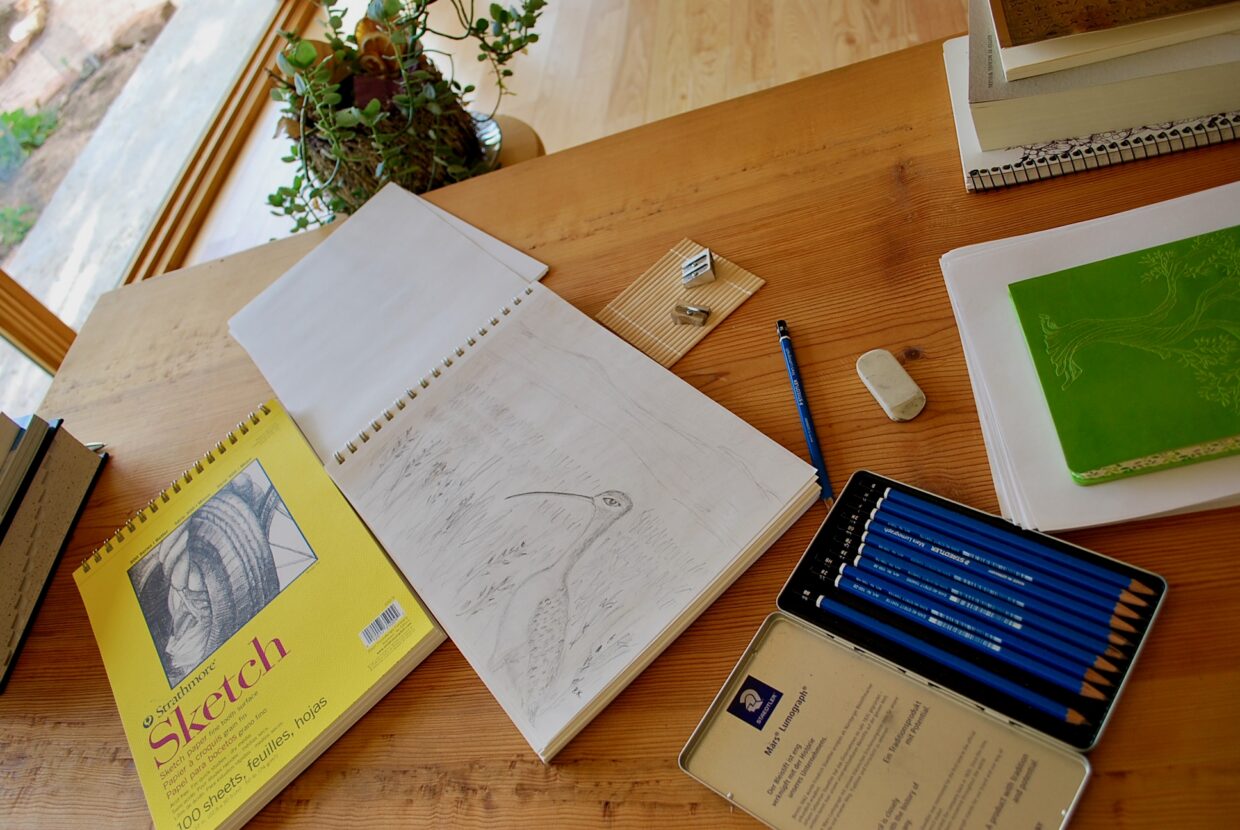
Drawing curlews, I was surrounded by my instruments again. The silver-and-blue Staedtler case with twelve Mars Lumograph drawing pencils, the white cloud of an eraser, the Kum stainless steel pencil sharpener. I’m not fetishizing these materials. John Steinbeck used Black Wing pencils and geared up to write for the day by sharpening his stock. In his journals Steinbeck complains about how sore his fingers got after writing with pencils all day long. I have a fondness for my 5B pencil which helps me finish my drawings. Henry David Thoreau made pencils, and he resolved to make American pencils better than European ones. An 1840 stint at the Harvard Library led to the insight that mixing finely ground clay with graphite would allow Thoreau Pencils to be graded from soft to hard. In 1844, he invented “a grinding machine that produced exceptionally fine graphite powder—the key to a strong, even point.” Thoreau knew that there is nothing like the right pencil. I agree. The just-right pen or pencil can help me enter the creative space I unknowingly sought as a child when I derived pleasure from ink, for god’s sakes, instead of ice cream.
Soon drawings were splayed about my desk, accumulating day by day. That spring I was to speak at the Santa Fe International Literary Festival and a publicist was tasked with dropping off a few copies of a magazine I had been interviewed in. In the thick of drawing, I had stopped going out, and I asked the woman to come over to my studio for a cup of tea instead. After she had the rooibos tea and dropped off the magazines, she happened to walk past my desk on her way out. The drawings were now stacked in a somewhat neat pile. Noticing them, she paused. There was nothing else to do but ask if she’d like to look. “Oh, yes!” she said. I hadn’t shown my paper curlews to anyone other than my family. Soon she was oohing and aahing and all but talking to the curlew chick, and I knew in those moments that these drawings would be the artwork in the book.
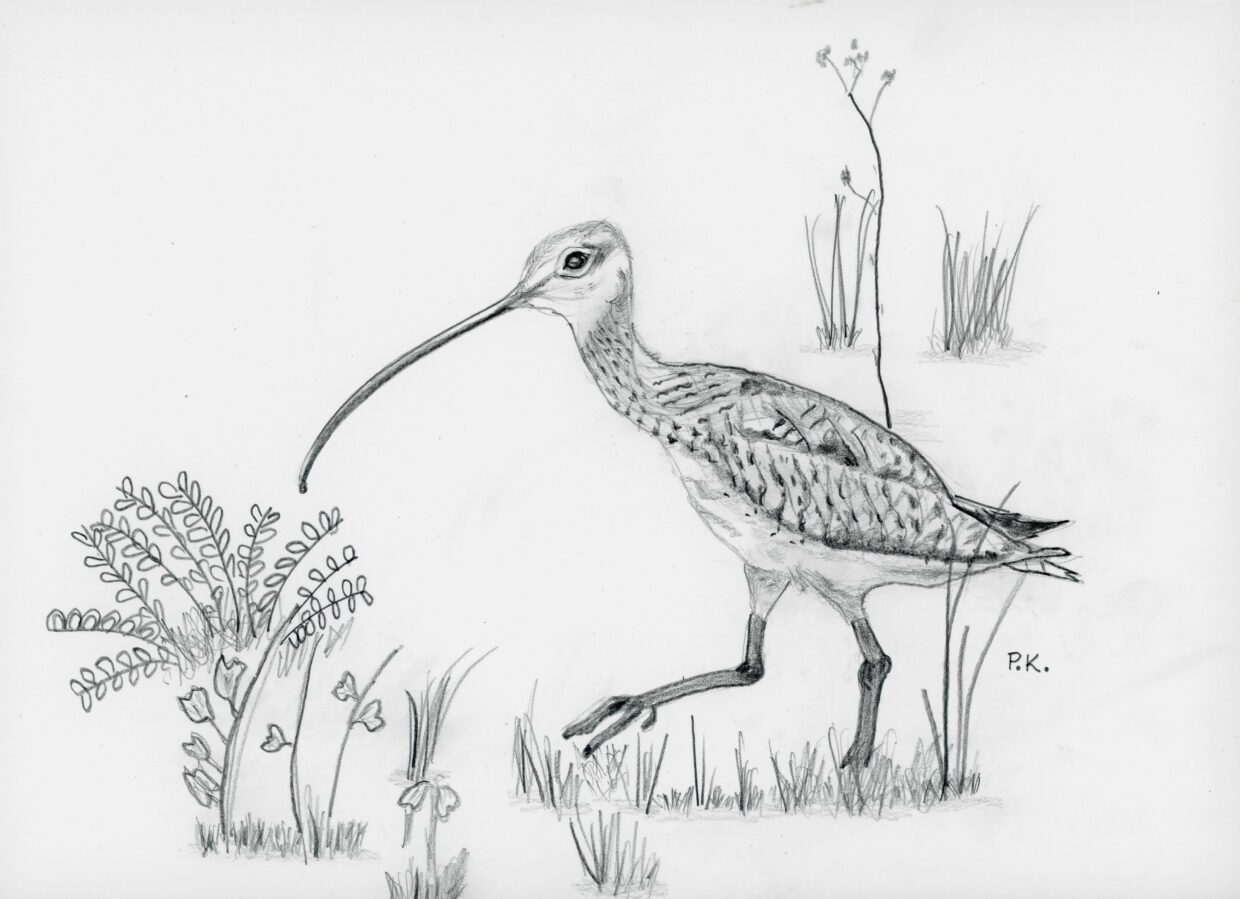
In the days that followed, my desk became smudged with pencils, not ink, and I dreamed up coyotes instead of Himalayan jackals, and curlews instead of tropical birds, but the experience strangely transported me back in time. I couldn’t have imagined that the act of drawing animals day after day for some four weeks, working only with paper, computer tucked away out of sight, would be like drawing an arc from the working naturalist I am now all the way back to the child who loved forests and inexplicably got high on royal-blue ink.
_______________________________
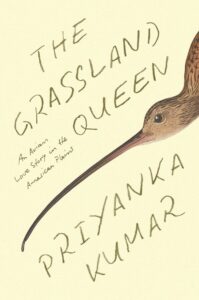
The Grassland Queen: An Avian Love Story in the American Plains by Priyanka Kumar is available from Princeton University Press.